
Life Reimagined

 Apple Podcasts Apple Podcasts
 Spotify Spotify
 Spreaker Spreaker
 iHeartRadio iHeartRadio
 Amazon Music Amazon Music
 Castbox Castbox
 Pandora Pandora
 Deezer Deezer
 Podcast Addict Podcast Addict
 Podchaser Podchaser
 Youtube Music Youtube Music
 Castamatic Castamatic
 Castro Castro
 Fountain Fountain
 RSS Feed RSS Feed
 Goodpods Goodpods
 Overcast Overcast
 PocketCasts PocketCasts
 Podurama Podurama
 Podverse Podverse
 Podyssey Podyssey Apple Podcasts Apple Podcasts Spotify Spotify Spreaker Spreaker iHeartRadio iHeartRadio Amazon Music Amazon Music Castbox Castbox Pandora Pandora Deezer Deezer Podcast Addict Podcast Addict Podchaser Podchaser Youtube Music Youtube Music Castamatic Castamatic Castro Castro Fountain Fountain RSS Feed RSS Feed Goodpods Goodpods Overcast Overcast PocketCasts PocketCasts Podurama Podurama Podverse Podverse Podyssey Podyssey
Are you feeling stuck? Do you dream of a life with more meaning, passion, and joy? Then you've come to the right place! Do you find yourself searching for your purpose, feeling unfulfilled or lost in your current life path? We are going to discuss this and more. Address those feelings about seeking more meaning and purpose, looking for inspiration and motivation to live your best life, committed to personal growth and self-improvement.
Life Reimagined is for anyone who is Seeking Purpose.
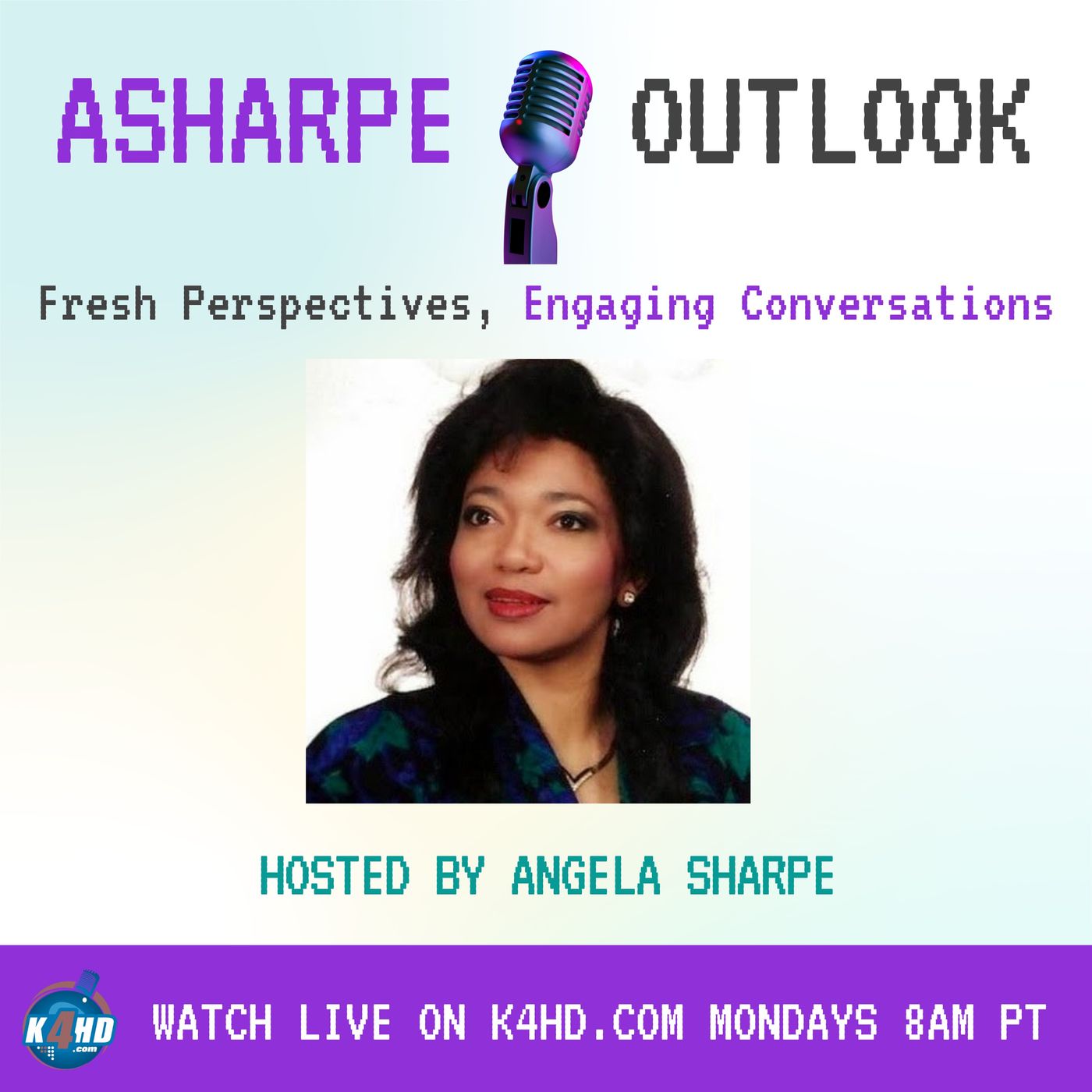
ASharpe Outlook is broadcast live Mondays at 8AM PT on K4HD Radio - Hollywood Talk Radio (www.k4hd.com) part of Talk 4 Radio (www.talk4radio.com) on the Talk 4 Media Network (www.talk4media.com). ASharpe Outlook TV Show is viewed on Talk 4 TV (www.talk4tv.com).
ASharpe Outlook Podcast is also available on Talk 4 Media (www.talk4media.com), Talk 4 Podcasting (www.talk4podcasting.com), iHeartRadio, Amazon Music, Pandora, Spotify, Audible, and over 100 other podcast outlets.
Become a supporter of this podcast: https://www.spreaker.com/podcast/asharpe-outlook--6643730/support.
0:01 This program is designed to provide general information with regards to the subject matters covered. This information is given with the understanding that neither the hosts, guests, sponsors, or station are engaged in rendering any specific and personal medical, financial, legal, counseling, professional service, or any advice. You should seek the services of competent professionals before applying or trying any suggested ideas. Hello, and thank you for tuning in to a Sharp Outlook on pay for HD Radio and Talk or TV. I am Angela Sharp, Your host our arm chair discussions with industry experts will give you the steps, tools and information to be successful in business and to prepare you to be your best self. Hello, I'm Angela Sharp, and welcome to a Sharp Outlook. Today, going to talk about your life being reimagined. Imagine that. Are you feeling stuck?
1:08 Do you dream of a life with more meaning, passion, joy? Then you've come to the right place this morning. Do you find yourself searching for purpose, feeling unfulfilled or lost in your current life path? We are going to discuss this and more. We are going to discuss those feelings about seeking more meaning and purpose, looking for inspiration and motivation, to live your best life, committed to personal growth and self improvement. Your life can be really imagined. And what would you be? What kind of person am I talking to you? I'm talking to someone overcoming fear and self doubt, having difficulty building stronger relationships, looking to create a fulfilling career, Needing to improve your health and well being. I know about that, a desire to know joy and happiness. Are you ready to take control of your life and start cultivating a growth mindset, achieving financial freedom and living with intention? Well? Todave.
2:17 I have a guest, and we're going to talk about being able to reimagine your life, looking at where you are and making decisions to change that particular trajectory. My guest is Eric Ayers Airs. Sorry is an innovative catalyst and transformation guide building cultures where innovation is human centered, scalable and sustainable. Guides organizations to align purpose, people and process, creating to ripple effect of positive change. Eric is the founder and CEO of my company is EMC squad Aired LLC, and I offer life by this design with two paths, one through my aligned by Design and group organizational through culture by design. Think coaching versus consulting. He has been an RN for over two decades. He is a creator of SIM Prescription Trademark, which is the ultimate Culture by Design modality use for consulting organizations specifically healthcare and shifting culture through empowering and experimental education. He's also an author of a book called SIM Prescription Trademark Transforming Healthcare, Leadership
3:49 and Culture by Design, which is the book that houses the modality and framework to create the culture organization seek. He offers life by Design, which is two paths, one through the aligned by Design and group organizational through culture by Design and think coaching versus consulting. I'd like to invite Eric to join me so we can begin our conversation how to reimagine your life and taking control and how about let's just not be stuck any longer. Hi, Eric, Welcome to a Sharp Outlook. Hello Angela, Thank you so much for having me. This is super exciting. Yeah.
4:34 Here, I'm really happy to have this conversation because I know I have been. I had been years ago struggling with health issues and I you know, went through the whole take all these pills kind of medication to make things better, and it got I got worse instead of better. I used to have all sort of colitis, and anyone knows anything about it. It's a devastating, embarrassing almost you know, you know, you're almost stuck in the house. You can't go anywhere. Just because of the controls that normal people have.
5:15 You no longer have them any longer. Absolutely. He finally came up to the point where they tried to give me chemo and shut down my immune system. That's when I said, you know what, I'm not taking any more medicine. And he said, oh, you don't have a choice. I'm like, oh, I do have it. Yes, not to take this path and allow medications to kill me. No, thank you. And after two sessions of it, and I was so sick, I was like, I can't do this, You can't do this. And I went to a medicine woman from Warm Springs had gone to her teaching on herbs and medicines, and she told me to take Devil's claw, and in fact, they make a lot of anti inflammatories from devil's claw. Hey, how about just giving us the tea.
6:07 I'm sorry I had to do that. I drank the tea and when two weeks after eighteen years of suffering, it was gone. I've never had another episode, and my immune system is strong. It keeps me from getting diseases. But I had to make a choice for my life that I wasn't going to go down somebody else's path as to what. So I'm really excited to talk about it. Time to modernize how we treat ourselves. Absolutely, tell us. More about your program. Yes, So to start off, I woant to recognize the power that we have in remembering that, remembering that understanding of so in your story, there was a point of identifying I'm not going to go further in this treatment because I have this remembering, this understanding of something higher, right, something innate within us. And I refer to that as our five year old self. Because our five year olds very rarely needed permission to reimagine anything. They continuously reimagine.
7:16 They were not confound to the constructs of limitations. They lived in a world of possibility, and ultimately, at the core of everything, it's it's the five year old plus the idea of ou boontu of I am because we are we are human. So healthcare is a human service industry, and I'm proposing that the human element is what's missing in healthcare. So CMRX is our prescription for compassion, connection, and competency, and I personally believe that if we have those three, then we are able to create a culture beyond beyond simply treating a illness, and now we're able to care for the humans that are entering our space.
8:10 So that's that's the that's the entry to some RX in my world. Well that I mean, I can definitely say that I don't feel the humanness when I'm going in. It's like they go look at a computer and I do software for my day job. I also am an accountant. I understand analytics, I understand you know, trends and all of those different things. I don't want you to treat me like I'm a trend. I want you to treat me like I'm a human and listen to what I'm saying and then let's let's resolve it based on what I have told you, not what you go in. Because there may be some some symptoms I have that's not on your chart. So I'm going to get bad care. I'm not going to get I mean, I mean, we love doctors, we believing I'm not trying to harm anyone, because I know you're restricted also to what the little plan is that they set out for you. And that's how most those types of jobs, even in finance, even in tech, you know, you usually have these little restrictions and you stay within these guidelines and it will work. But it's only design based on what was happening at the time it was built, which it was built too long ago, Eric, it was refreshing this thing and start doing something else.
9:44 Absolutely absolutely, And it's built on systems. And the disconnect in my personal experience is the recognition of we have these thousand employees thousand plus employees in a hospital, for example, and the all doing their job because they're following the system that is built within there. But where is the passion, where is the potential? Where is the upgrade? Right? If you know AI is entering the world, we have to recognize AI. If we don't, then we're going to be the one sitting at home with the Encyclopedia Britannica and not using the Internet like this is coming. So how do we use it? How do we prepare ourselves and how do we make it better? And I think we do that together. And so I feel as though sometimes the system blinds us to our potential, and I think that's another aspect of the human element being pulled out of that because it's methodical, it's habitual, and it's a factory style mode of work. So how do we how do we create human centric innovation? And that's the that's the missing piece because it brings balance and it brings us back to alignment. And I think that starts with self and our self journey then can create a collaboration of others.
11:12 Well, what does life reimagine mean to you? And how does your work help people achieve this? Absolutely, so when I think of reimagining life, I don't think about adding more grind. You know, we live in a world of hustle and bustle, and it's like, oh, just put your head down and grind. To me, that's that's the opposite. So I think of you know, how my five year old would do it? They would he would approach it with more curiosity, more play, and more connection. So and I think that's where transformation begins. So life reimagine is taking the the words and the idea of Neville Goddard of living from the end, figuring out what do I want what aligns with who I am, and I'm going to picture that. I want to picture it so well, then I'm going to have an emotional feeling towards that. And then let's work backwards. So what is my plan to get there? What brings me joy? What am I allowed to play? Which is curiosity? And to me, play is curiosity and enjoy put together. And these micro steps create this macro shift. And when we get there, when I get there, I feel as though there's been a huge transition, but I've only taken these micro steps that have shifted my trajectory. So in a nutshell, that's
12:46 what reimagining life to me is. You know, I as you were talking about being that five year old and imagining things. Now, I'm let's just say, I've lived quite a long time, and uh, we didn't have like you know, they did have tricycles and bicycles. But my neighbor friend we decided because we used to play together fred I still remember his name, fred Rice, and we decided we wanted to have a go cart. Now we didn't have any open up a box and put stuff together. We found some old wood that was laying around because people were you know, building their house, so we stolled their wood. I'm sorry, I'm slorry. We hit the saw. We were out there cutting it up to make the sideboards and made pedals and then we got some rope that ended up, you know, helping to propel it. And we was just so when we moved the pedals that it moved the wheels. And oh, I mean we just we didn't know what we were doing, but we imagine what we wanted to get to, and we created a go cart and of course we had to use our little foot power, but you know, we still were able to steer and all this other stuff.
14:07 We built the coolest little gold cart. And I mean, I mean we just had we were smiling, we had the grands, we had laughter, We just had a good time. But we actually engineered something and we had no background. We were like maybe five six years old, you know, out there and gosh, that was so much fun just imagining building something that was mobile. And I mean we would race it down the alley over to the fairgrounds, which wasn't too far from us. We just had a ball. So I mean just remembering that. Yeah, and I could feel that energy as you share that story. So thank you for that. And imagine if we do this in our everyday job. Imagine the joy and the amazing innovations that we would create on a daily basis. And it's like every day is how do we make this better? Not that it's not working, but we're evolving because we're spiritual beings who are here to be as large and as expansive as we possibly can.
15:15 So if we if we are, then how do we expand that into our work? And you know, I could see the right brothers in your story. These these you know, two bicycle mechanics who are like, oh I saw a bird fly? What if we build something like that? I don't, we don't know what we're doing, but we're going to try and fail so many times that we're going to figure out how to defy gravity. And so these are innately in all of us. I think it's giving us, are giving ourselves permission to go there again, because I think the world we've allowed the world to take our permission slip away, and so now this is giving ourselves a permission slip to create and to be curious.
15:59 And again, well I'll tell you that I mean when I think about that, that I know all of us have some kind of creative spirit or something because it comes, you know, from the divine yes and whatever challenges that we've gone through though that kind of try to dampen that or you know, restrict that or whatever we have to, you. Know, kind of shake that off. That's someone else's problem over there. Let's shake that off. And wow, if we just let ourselves just for a moment, let our minds like Rome, like like the five year old who had no restrictions on what he thought he could do. He didn't have any boundaries, he didn't have any ideas that I can't do it. He was able to do the impossible.
16:50 And it's time for new revolution in the nation and in the world. Like I said, AI is a new revelation of what started when I began working was the PC. I saw the first PC, and we used to have old punch cards to try to get financial information out of a system. And I had to. I was forced to learn how to write software code because it was the only way I could perform my job as an accountant, because it was the only way I could get reporting. So I learned software writing because the technology was changing the world was changing, and I had to keep up with it, but you know, I was It was cool for me because I was like, let me see how this happens. And so yeah, that's kind of like kind of like what you know, what you have to do just imagine what you could be and forget about where you've been and all the hurts and all the pains and the traumas and things like that, and go back to where you've dreamed. You know. That's how I kind of kind of think it. What are some of the biggest limiting beliefs or society norms that hold people back from designing their ideal lives.
18:05 Yeah, I think we touched on it a little bit because you reference it in your story of you said we were not engineers. We were only five or six year old. So I think one of the biggest limiting beliefs is title. We don't have to have a title to change the world. We simply have to be who we are. And identifying or identity tied to a job title is actually disempowering because if I don't know if I'm a manager of a unit, if I take that on as who I am and that's my title, that's all I do, and it completely creates this dissonance of who I actually am, and over time, that dissonance, which is disempowering, creates burnout. So I think, yes, understanding, all right, this is my title because this is what I've been put in charge of. But how do I align this with my true superpowers? Because we all have superpowers and getting a team together and utilizing everyone's superpowers is one of the coolest things to ever witness, because ego is like driven out of the way and now it's a bunch of five year olds in the sandbox again saying how are we going to build the coolest sand castle?
19:28 And everyone's like, I'm really good at constructing, I'm really good at organizing, and then all of a sudden, like we have this amazing product. So just like your go kart that you and your friends created, it just happened because everyone tapped into their innate genius. So and I also think the limiting belief of seriousness equals professionalism. I think that's false. I think if we've all been on boring meetings to where it's professional, but but it's like this is an hour of my life I can never get back. So how do we bring the fun back into our work right, because we enjoy. When we enjoy something, we remember it, we feed into it, and we don't feel bogged down. And the example of that is learning to ride a bicycle like this is scaling fun. At first.
20:22 We have no concept of gravity until we fall, and then we're like, okay, I lean to the right. This time, I'm going to lean to the left and then you fall to the left and then you create balance and then you're riding. But when we learn to ride, we don't just stop. There's not a stop. It's oh, I learned how to ride. This was fun. Now what's the next step? How much more fun can I have? And then you get to the point where you know, people ride miles at a time and they're enjoying the scenery, riding off roads, and the fun continues to scale because we're curious, we're playful, and we're learning as we go. And if we're learning, we can't judge. And that's a key piece of If we're curious, we're figuring out something and learning and it takes the judgment out of the way and we're literally the five year old figuring out how to build this go kart and the rest of the world doesn't exist because it doesn't matter because we're changing the world in this moment. So that's the short long of it.
21:31 Oh yeah, it makes me think of you know, I consult now, but I used to be in an employee and in the corporate environment, and I would be sitting in those meetings, generally the only women because at that time not a lot of women were in finance or tech. And you know, everybody's there, you know, standin there all stiff and this that and the other night you want to talk about breaking down the ice. I would look at them and say, you know what, you guys need to lighten up, because let me tell you who you really are. Since you think you're so important, if you go out here and get hit by a bus, there are one hundred and twenty five applications in there to replace you within the next thirty seconds. So don't think too much of yourself and your little title. And I was like, we are all here to sit and bring ideas and come up with solutions. There's no big person here, there's no little ie, there's no big eye. It's just us, So let's knock that stuff off. They would me and be shocked but I just I, you know, stop looking at the title doesn't mean anything. It might mean you get paid a certain amount, but it doesn't define who you are as a human being. And you're right. We have to stop the titles and realize, especially in an environment where you're working as teams, everybody is supposed to
23:01 bring something to the table and then we flush it all out to find the right solutions, and no one person knows everything. We do need collaboration, we do need other input, and so yeah, yeah, just tear that stuff down. Okay, you managers out there, stop thinking you're the God's give to the world. You're just a human that has a specific gift. Use it to help others to grow, because you're not always going to be in that position. I used to tell them, Yeah, I want you to learn my job so I can get a promotion. If you don't learn my job, I can't ever be promoted. People sit there and hould information heid to you're going to be stuck there. Share it so you can get up and move up or do something else.
23:49 My goodness, great, that brings up a very good point. So this is what introduced me to the full understanding of the scale of cmrx X at a bare bones is creating micro content for macro change. So how do we bring simulation and education to our people to allow them to practice like they play and practice until proficient. And there is one moment where I saw a physician that I highly respect. We were we were working a serious situation on an eight year old and he was doing chess compressions on this on this child, and he wasn't paying attention to the to the job that he was doing. He was actually paying attention to the family and emotionally supporting them while he was providing life saving interventions.
24:42 And it click to me that that is that is true competency. If we know how to do something so well we don't have to think about it, we automatically have the ability to provide human connection. And that's what's missing. So if we if we can completely shift from a factory style mentality of I'm going to do this, this, and this, and say I'm going to be so competent in my job that whatever's asked to me, my body's going through the habitual patterns and motions because it knows how to do it. And I'm going to provide emotional support for the human being that I'm taking care of in front of me. Everything shifts because the care is amazing because we know how to do that skill, task, whatever the case may be. But more importantly, this human on the other side feels worthy, they feel seen, they feel heard, and they feel like they matter. And if we can do that, the possibilities are endless. And so ultimately, this is competency to me, is creating an environment to where the culture is driven by pure competency because we're leading through human connection. And to those managers, this is where leadership comes in. Is when you know how to manage your you know your title manager so well, then you can start leading and how do we get to that place? How do we get there? Even quicker?
26:12 Yeah, yeah, absolutely, And I don't think a lot of managers understand the difference. You know, you set up your processes and if everyone's following the process, everything's managed, you're going to reach your goals, you're going to get what you're supposed to be. But then there's going to be other things because companies are always expanding where they're going to need leadership into something new. Now you're going to be spending time helping to bring knowledge to your team, so they're able now to go project into this whole new environment where there's going to be you know, some wins and some losses and different things like that, and they're emotionally not going to you know, take it personally and feel like, oh gosh, I let everybody down. No, that's just all part of progress. They're going to be some wins, there's going to be some losses. But a lot of people don't know what leadership is and what management is, and they really are two different. I wish I'd get rid of the titles, my goodness, because yes, they're really not. They don't help the organization.
27:25 Yeah, because it's interesting the title of manager, but they're over a department of people, right, and then the leadership team is the c suite? But who are they put in front of leading? Right? And so this is the caveat to taking our title as what we do and who we are, you know, if we can simply be yeah, Okay, I'm really good at managing task and processes. But I'm going to empower anyone I can because I'm going to let them know this is progress over perfection. So if you're failing, awesome, that means you're trying. And it's only failure if you give it permission to be so. Otherwise, it's a learning opportunity. So let's keep learning, and let's keep let's keep doing this, and let's let's practice the way we play practice so proficient, and let's let's see how we can shift this culture into something that is empowered by the people that actually run the hospital. The employees, right so.
28:28 Right right, and they're because they're they're on there. How do you say it, I don't know how to say it the right way, but they're on the ground, actually touching the people that are really needing the help you have. The others, like you said, the C suite, they're not in touch with anything. They're kind of like on their little cloud. Hey, why don't you come down out of the sky and see how everybody else is working out. You might be able to come up with some better ideas. It's just, uh, you know those kinds of things. You know, you've got to have your teams and things like that. But one of the things I always used to say when I was training people to be a manager or a supervisor, I let them know that it's your job that other team members learn and if they failed, you're going to have to ask yourselves some questions. Did you give them all the tools they needed to succeed? Not the tools you used to you, but the tools they need to succeed. If they failed, you're responsible because you didn't prep them and you didn't give them all of the workable tools they needed to succeed in their position they're in. I mean, if we humanize our work environments a little more, you know, if they would really be so much more productive, you would have customers out there who would actually be excited to share. You want a
29:59 shop here? These people are so nice because people could be nice because everything's flowing. Cool. Absolutely, But if you know all of those gaps. And their leaders, it's flowing because their leaders set up an environment for them to be human, for them to be who they were hiring to be. And that's the that's that's the beauty of it when it's set up correctly. And yes, all of that love it, love it. What are some practical steps listeners can take to initiate transformative change in their lives and if they feel stuck or over overwhelmed.
30:41 Yeah, this is this is a fascinating topic because it can go into many different, many different areas. I think first and foremost, we have to recognize. If we don't recognize, we're simply going through the habitual patterns of our paradigms that were created. So it's I tell my coaching clients when when they get really frustrated at themselves because they recognize a pattern that they've been in. No, this is amazing because you actually recognize it. Now before how many years, twenty years have we've been running in this habitual pattern and now you recognize it. We can't do anything unless we identify it and see it. So if we see it, recognize that, oh, this is amazing, Like this is a level up of I'm seeing this from a different perspective.
31:30 And breathe. Breath is one of the most sacred, amazing sources that we have to work with and breathe and offer self forgiveness because we are not perfect. We are here to learn and this is part of this is part of learning. And something that was said early on in the in the show is like, be playful, don't take everything so seriously. And I'm speaking to myself here as well, because I'm you know, a recovering perfectionist. So I the same thing. And it starts with that. And if you need a visual, ask Okay, what would my five year old self do right now, because they already have the answer. It's and that allows us to get out of our own head and then to remember who we are. And I think that's the biggest key.
32:25 Yeah. And if you look at five year olds, yeah, they might fall down or they they might you know, not do things quite right, but they let it blow over their head. It's like it's really not that serious. They don't get bent out of shape. We get so bent out of shape and we and we are worst critics. We can't even get along with ourselves. We look on the mirror and it's like, you know, we're upset. It's like, you better love you, because if you can't love you, you really can't love anybody else. Right when you when you have this I don't want to say it this way, but this kind of self hatred, you can't love anyone else.
33:06 And you have to forgive yourself and realize that you do have a value. You just have to find out what is in you that brings the value out that can be a part of humanity absolutely just not knowing that. How can people I identify their core values and ensure their life design is aligned with them. So this is this is interesting because you know values is it's in every business's business model right, their mission, their values, and that begins with individual values. I honestly believe that we rediscover these. So we'll take my personal story.
33:58 I'm ten plus years into healthcare, into nursing, and I'm completely burned out. And my first my first introduction into this burnout was my wife catching me before I walked out the door and said, hey, Eric, when you go to work tonight, look for something good because it's are you just have to look for it. And I was like, you're crazy, No, everything is awful, Like I mean, do you understand the world I'm living in? And I'm going through the chaotic mess? And then the story goes. It was the greatest night of my professional career. I was introduced to a four year old down syndrome patient who was so sick, but she had one energy to give to me, and I just knew it was good. I didn't know what it was. And then her dad started interacting with me, and it was a really tall man that offered compassion and his voice what he was saying was good. Again, I didn't know what it was. I just knew it was good. So it turns out that was love. It was unconditional love in two different ways.
35:00 And it was very interesting because I was I created such a dissonance in my purpose and what I was doing that I didn't recognize who I was anymore. So first step is identifying there is a gap and then actually going within. So I realized I was not feeling emotions at all because they were a protective mechanism that I created from the bad things that I was seeing, you know, in results of patients that I was caring for. And it was a protective thing, but I couldn't turn it off and on. It was numbing me. So what happens when we see the world through joy, curiosity, and belonging, which is what this idea of where is the good?
35:55 That's what I started seeing, and the finding the good good led me back to my mission, my purpose and my values and values can change. Of course, there's value assessments that we can do, but having you know, I think this depends on where we are in the environment and in the in the work environment. If we are a manager, we're at an amazing place to offer value propositions to our employees to help them see that, and then likewise we can do that with our uppers. But so if it feels fuzzy, again, start with the younger self, like what what did you enjoy doings as a child?
36:47 My five year old self loved boundaries, buddy, loved to take it all the way to the boundaries and saying how far can we stretch this? How far can we move these boundaries out? And it was the innovative self saying how can we make more room for more people to come play? And how do we do that? So human connection, human involvement that became remembered value of mind. Well, how do people stop the voices that kind of hold them back? What are you know? What are some common obstacles people face when trying to redesign their lives and how can they overcome those voices? Those voices that say you're not worthy, or you did this? Are you gonna mess it up? Or I know what I used, I did, but I.
37:43 Yes, And the voice of not enough was my voice. And that's a lot of voices that people hear starting off. I'm gonna let everyone know you were more than enough and you were so worthy and you're worth it. And if you don't hear that from anyone else, I'm speaking truth and say that back to yourself. That is, to me, the number one voice that is debilitating. And so when we recognize this voice of not enough, not living up to unrealistic expectations, there's a couple of things here that are very powerful. One recognizing and asking yourself, is this my voice? Because chances are it's not. Chances are it was built from a situation or an environment that allowed us to take this as a new title of not enough.
38:41 The second thing is standing in front of a mirror and saying I am more than enough, I am worthy. I love you, and it's the weirdest thing in the world until it's not. And there is something about saying it to yourself. Luise Hey built a empire around tending to our younger self, and it starts with offering forgiveness and offering and doing this through mirror work. So that would be the first thing. And then also like pausing breathing and while you question that voice, like whose voice is this? M H, and understanding we don't have to give it permission to live in our head anymore. We don't have to believe it. Just because we have a thought doesn't mean it's true, and we don't have to go in this habitual pattern. So whose voice is it?
39:33 And even if it's mine, whose is it? Because even if it's my voice, where did it come from? And become curious about it and find it and be like that's not who I am? I am worthy. Yeah. I remember years back of a girlfriend of mine. She and I would go every Saturday to the alcohol and drug addiction centers and meet with, you know, those that were there, you know, trying to kick addiction. And we would just you know, talk with them and share with them. And I did a little i don't know skit, you know, to show them what they were worth. I took a twenty dollar bill. I said, who wants this twenty dollar bill? And it was a brand new one.
40:28 It was crisp and looking really good, and everybody was like yeah, yeah. Yeah, yeah. And then I crumpled it up and then I food on the floor and stepped on it and grounded in the dirt, and then I was just about getting ready to spit on it, and I said, oh it's dirty and enough. Okay, now who wants this twenty dollar bill? And then it kind of saw some of them not raising their hands. I'm like, why aren't you raising your hand? WHOA because it got a little dirty, it got a little crumpled up. Well, let me open it back up. Isn't this still a twenty dollar bill? It has not lost its value. Maybe the outside of it got a little dirty. Maybe the outside of it got a little crumpled, but the inside it's still twenty dollars. It'll still go by, you know, a burger and surprise and a Coca Cola and some other things. It didn't lose its value. Well that's who you are. You got a little crumpled, but your value hasn't changed. Now, I just need you to see yourself that you still have the same value. Stop those voices in your head. I will suggest maybe changing some of your friendships and connections, But stop telling yourself you're not worthy. Stop telling yourself you're not good enough.
41:52 If you feel like you've hurt someone, go say I'm sorry, and then stand in the mirror after our meeting and go tell yourself I'm sorry. Forgive yourself and let's move on. You got too much talent, you have too many gifts, you have too many great things inside of you. Don't let this steal away the beautiful life that you was intended for you, I'll tell you. And I enjoy that because you know, I'd be walking down the street going to lunch for my job and I remember this girl chasing, you know, running across the street, Angela, Angela, Angela, and I think, yeah, you probably don't remember me, but I'm so and so I'm in college now. I used to be at the treatment center and it just made me feel so overjoyed because just telling them that they were worthy, made them change, made them seek better things, made them reimagine what their lives could be. Absolutely, it was happening before you even knew you're what you were saying.
43:02 Eric, Yeah, you you gave them a permission slip. And like, it's the most beautiful thing that we can do as humans is open someone's eyes to the construct that they've been living in and say no, no, no, you're you're valuable, Like, see your value because we see it, and we're better when you're with us. So I love that, And you know it's amazing the stories that we tell ourselves. And you know I used to early on in my marriage, I would tell my wife, if you could only see me through my eyes instead of yours, you would see the the beauty and the profound amazingness that that's within you.
43:44 And so like, how do we start to see ourselves from other people's perspectives? And I think that that starts with like the human connections that that we intentionally put forth. Like I love that story because yes, we are valuable, and we are going to get dirty and maybe ripped and torn a bit, but like that adds, that adds to the story. It doesn't take away the value. Yes, it really does, it really does. And you know I would feed on Friday nights. I would feed the homeless, and you know, just just working with them. A lot of them were veterans, and my heart goes out to them because they gave so much and they come back and nobody sees them. They walk past them like they're a tree or a rock on the sidewalk. They don't look them in the face, they don't see them. And I don't know whether it's a fear or what it is, but you know, I said, they just need to be seen, and so it really helped them, and so many of them were able to to pull their lives together. Some of their stories, oh my gosh, they were unbelievable. But you know, I would be there just to listen to their story, and I think just just me listening really helped many of them to make different decisions. All of
45:19 them are because of some choices, and like we can. We just got to choose to go for our purpose or you know, whatever stopped us or changed us. And you know, I think we need to talk to ourselves and be our own best friends instead of our own best critics. Because you can run into a whole lot of people are gonna put you down. For sure. We're outside, you don't have to look far. Somebody there, but so you have to come in and tell yourself. And I always keep hearing my mother and my father's voice telling me, oh, Angela, you can do anything, and that it really still makes me keep going. It really does hearing and say, oh you can do anything. Okay, so you messed up a little here, but you can do anything. And that's always pushed me and kept me moving onward, onward, onward, And so it's just you know, can you share some examples of small, actionable steps the listeners can take today to start reimagining their lives.
46:28 Yeah. After so, let's say a situation comes up and it's an identification of wait a minute, this doesn't feel an alignment or I'm burned out or there's a dissonance, a simple journal of what would my five year old self do here and having no constructs, literally tapping into imagination. Something else that is super simple but very profound is to swap it obligation for a joy this week. So whatever that may be, let let a joy come into your calendar. Replace you know, the something that you have on there with something joyous, and then share it with someone like legit, share the joy the experience with someone for not only accountability, but for connection, Like give someone else a permission slip to reimagine their lives, because that allows us to tap into this well of a spring that is never ending, and it opens up a different level.
47:45 So yeah, those are three very small but yet very profound things that we can start doing right now. Well, we're running out of time. I'd like you to share with the audience because we are also on how can they get in touch with you and your organization and even your counseling. Yeah. Absolutely so, I'm on LinkedIn, I'm on Facebook, Instagram. Also, my website is Life Bydesign dot me. I have access to all of the things that I offer Aligned by Design, Culture by Design. You can pick up the book similar XT Transforming Healthcare Leadership and Culture by Design on Amazon.
48:33 Those are the easiest places. Or email at Eric at Life by Design dot Me. Okay, and I will have this put out on my website so that people able to get in touch and get this wonderful information. I mean, yes, I've had a long work career and everything, but yes, I'm still redesigning myself. I've done it because I plan on living to be one hundred and twenty. Okay, maybe one hundred and five, but I plan on being around, so I have to continue to redesign myself. Absolutely, Eric, thank you so much for being here to have this, you know, just exciting conversation. You have to come back and give us more because there's just so much more you know to tell us, but we have to wrap up. I know everyone enjoyed.
49:25 It's time to reimagine your life. It's time to change those negativities and tell those voices in your head stop talking to me and move on and tell yourself you're wonderful, because you are wonderful. You are wonderfully and fearfully made, and there is a place for you to go and shine, so let's get to it. Thank you for joining a Sharp Outlook and as always, we are here every Monday at eleven am Easter Time, eight am Pacific time. And whatever you do this week, stay informed. I want to thank you for joining us on a Sharp Outlook. We have been informed and energized to take the next steps.
50:14 We have posted links to websites and videos to learn more on today's topic. Please join us again next week for another thought provoking conversation right here on key for HD radio and Talk for TV. Listen to the podcast on all the podcast apps, and until next week, stay informed.


