
AI Every Where

 Apple Podcasts Apple Podcasts
 Spotify Spotify
 Spreaker Spreaker
 iHeartRadio iHeartRadio
 Amazon Music Amazon Music
 Castbox Castbox
 Pandora Pandora
 Deezer Deezer
 Podcast Addict Podcast Addict
 Podchaser Podchaser
 Youtube Music Youtube Music
 Castamatic Castamatic
 Castro Castro
 Fountain Fountain
 RSS Feed RSS Feed
 Goodpods Goodpods
 Overcast Overcast
 PocketCasts PocketCasts
 Podurama Podurama
 Podverse Podverse
 Podyssey Podyssey Apple Podcasts Apple Podcasts Spotify Spotify Spreaker Spreaker iHeartRadio iHeartRadio Amazon Music Amazon Music Castbox Castbox Pandora Pandora Deezer Deezer Podcast Addict Podcast Addict Podchaser Podchaser Youtube Music Youtube Music Castamatic Castamatic Castro Castro Fountain Fountain RSS Feed RSS Feed Goodpods Goodpods Overcast Overcast PocketCasts PocketCasts Podurama Podurama Podverse Podverse Podyssey Podyssey
AI Everywhere is a podcast about how artificial intelligence is reshaping our world one industry, one idea, and one conversation at a time. We explore how AI is transforming the way we live, work, and create. From business and technology to education, healthcare, and everyday life, we explore the trends, tools, and ideas shaping our AI-powered world. What comes next? AI is no longer confined to labs and tech companies, it’s everywhere. We must examine the impact of AI opportunities and risks,
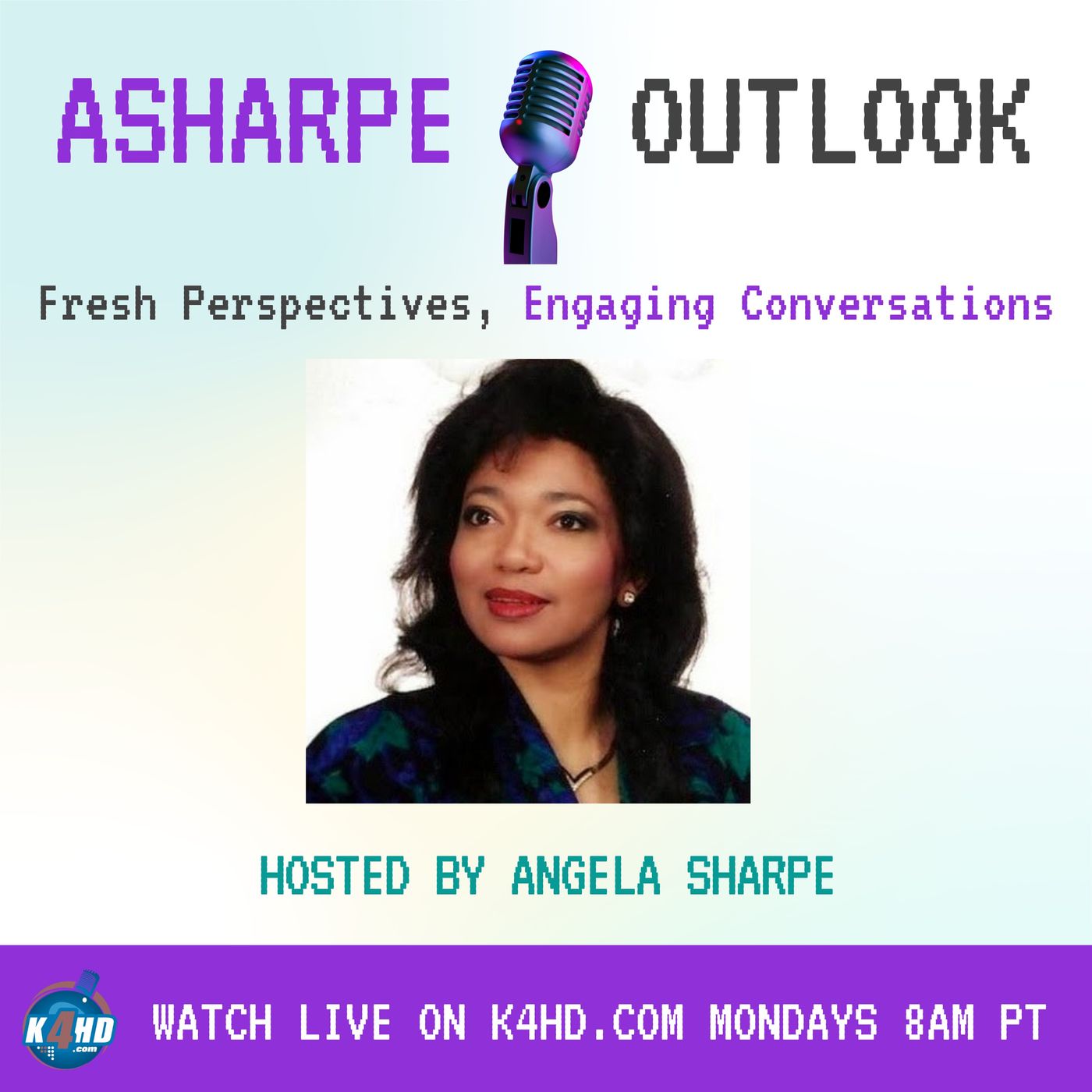
ASharpe Outlook is broadcast live Mondays at 8AM PT on K4HD Radio - Hollywood Talk Radio (www.k4hd.com) part of Talk 4 Radio (www.talk4radio.com) on the Talk 4 Media Network (www.talk4media.com). ASharpe Outlook TV Show is viewed on Talk 4 TV (www.talk4tv.com).
ASharpe Outlook Podcast is also available on Talk 4 Media (www.talk4media.com), Talk 4 Podcasting (www.talk4podcasting.com), iHeartRadio, Amazon Music, Pandora, Spotify, Audible, and over 100 other podcast outlets.
Become a supporter of this podcast: https://www.spreaker.com/podcast/asharpe-outlook--6643730/support.
0:01 This program is designed to provide general information with regards to the subject matters covered. This information is given with the understanding that neither the hosts, guests, sponsors, or station are engaged in rendering any specific and personal medical, financial, legal, counseling, professional service, or any advice. You should seek the services of competent professionals before applying or trying any suggested ideas. Hello, and thank you for tuning in to a Sharp Outlook on pay for HD Radio and Talk for TV. I am Angela Sharp, your host. I'll arm to your discussions with industry experts will give you the steps, tools and information to be successful in business and to prepare you to be your best self. Hello, I'm Angela Sharp, and I'm so glad you're joining me today on a Sharp Outlook. Today, I want to talk about something everybody's talking about. AI. AI is everywhere, Yes, it is. You know.
1:12 Artificial intelligence is reshaping our world, one industry, one idea, and one conversation at a time, from exploring and transforming the way we live, work, and create, from business and technology to education, healthcare and everyday life. Today we will explore the trends, the tools, the ideas about artificial intelligence and how it's shaping our world, and how is AI changing industries, sparking creativity and reshaping daily life. And when you think about that reshaping daily life, what comes next?
2:00 Official intelligence is no longer confined to labs and tech companies. It's everywhere. We must examine the impact of AI across society, unpacking the opportunities, but the risk and innovations, redefining how we think, work and connect. Yes, we're going to talk about AI everywhere, and let's be honest. AI is everywhere now. Is in our phones, is in our workplace, it's in our apps, It's in practically everything we use every day. And that's why so many people are excited about AI.
2:42 They're wanting to learn how to use it, they're wanting to use it everywhere, They're wanting to give it more autonomy. AI can save time, automate repetitive task and help people make better decisions faster. Not make the decisions for you, just help you make decisions faster because it provides data and information for you to be able to go in and review and to analyze and to come up with the best decisions that include humanity in healthcare, for example, AI can help doctors spot diseases earlier, but it doesn't mean that it should be the one that decides completely what the treatment plan should be, because we still need to think about the human side of all of our transactions, all of our services, all of our businesses. There is a human side. AI is not human, please keep that in mind. And for regular people it can help with writing, planning, learning, and even creativity. In fact, there's so much creativity with AI right now out in social media. Can you tell the difference? I mean, can you really tell the difference?
4:09 We have to think about that. That's one of the biggest benefits is efficiency and AI can take care of routine work so people can focus on the parts that require judgment, empathy, human connection. But at the same time, that's also where the concern comes in. If AI can do more task, what happens to jobs, We're going to talk about that. That's a major risk. Some jobs may change drastically, dramatically, and some roles may disappear. History shows technology creates new opportunities too, but the transition can still be painful for workers and businesses and communities. And it's not just jobs. There's also the issue of bias. I'm from the tech industry, and I remember when personal computers first started entering our workforce and a lot of the processes were changed and jobs were changed, and some people lost jobs because of the efficiency. Some people gain jobs because someone needed to help program all of this new technology.
5:25 Someone needed to be able to design reports because it only has as much information and it was given, but more information was required. So it has opportunities of creating great jobs, and it has opportunity of making things efficient and faster. I certainly agree with utilizing AI in business areas where you're using it for you routine task, but I am concerned about the issue of bias. AI systems learn from data, and if that data reflects human prejudice and inequality, the AI can repeat or even amplify those problems.
6:14 An AI tool might seem neutral, but it is trained on flawed information. Its decisions can be unfair, especially in areas like hiring, lending, education, or criminal justice. Then there's privacy. AI depends on massive amount of data, and that raises the big question about who collects that data, how is it used, and whether people really have control over their own information and misinformation. Well, my goodness, we already know what that's all about. Is another huge challenge. AI can generate realists, realistic I mean realistic tech, images, audio video, and that's where we come into some major issues, some risk, some problems that we really need to talk about. It's powerful, but it also makes it easier to create, to create fake content and spread confusion. So in a way, AI is both promising and disruptive. It can improve productivity, expand access to knowledge, and support innovation, but it can also create economic, ethical, and social risk. And even if it's not managed carefully, are we actually identifying who's creating the data that is being fed to the AI? Have we
7:49 thoroughly done background checks or are we just finding someone that you're placing in there because they're cheaper than another technician. What are we actually really creating here and how are we going to handle it? So, in a way, AI is both promising disruptive. It can improve productivity, expand access to knowledge, and support innovation, but it can also create economic, ethical, and social risk. It is not managed if is not managed carefully, and this is what we need to really think about. AI itself isn't simply good or bad. Its impact depends on how people design it, how they regulate it, and how they use it. And by the way, where are the laws about how AI is going to be used and regulated and monitored to make sure that it is safe to use and it doesn't create misinformation and it doesn't continuously hallucinate. That means the conversation shouldn't be what can I what can AI do? But also what should AI do? Hmmm, I haven't been hearing those kind of questions, so I'm throwing it out there, just something to think about. What should AI do and what should AI not ever do? Who is accountable when something goes wrong?
9:23 What should not be given to AI? The future of AI should involve not just engineers and companies, but also teachers, workers, policymakers, researchers. Everyday users should be tested, thoroughly tested to see whether or not misinformation has been placed in it or bias has been and prejudices have been placed into it. Because if AI is going to shape society, and society should have a voice in shaping AI. There should be committees, committees that are discussing what AI can and cannot do, Committees that have oversight over specific AI is used in specific industries, specific places like communication, like communications over our airwaves. Yes, we have a humongous amount of misinformation out there and it's just going to be on steroids the more we utilize AI. And the question is why would we want misinformation in the first place? When did the truth not become the best reliable source of anything and everything in the world? What is wrong with truth? Hmm? I know what.
10:56 You can't manipulate truth. You can manipulate data that has been developed for specific purpose and has one goal totally, and that is to confuse and to feed its audience misinformation. And then they go out and continue to spread misinformation, and before we know it, we have a battle going on as to what is the truth. There should be regulations. If it is not something that is fully thoroughly documented from the beginning of time, then it's not the truth.
11:36 Let's start dealing with truth and maybe we can utilize this tool so that it benefits everyone in society. The future of AI should involve not just engineers like I mentioned, but where are our policymakers. I have not heard anything going on on Capitol Hill about reviewing what's happening with the design and development of the AI. What regulations and rules should be in place. Yes, as far as making decisions, we do feed it regulations and laws and different things like that so that when you're managing your business, you're going to be in compliance with all of the regulations and requirements of your reporting, of your managing, of your tax preparation, everything, so that you can pass audits. At least it's supposed to be doing that. I'm hoping they're continuing to do that as they're developing and feeding it the proper regulatory information. But there's just so much more that's going on to shape our society. And so because it's shape and society, I think there should be committees.
12:57 There should be organizations or groups of people with the knowledge, the basic knowledge of what that industry is that this AI happens to be providing information for. Then you should have a committee to oversee that the information that is provided is accurate, it is truthful, it is documented, and it cannot be manipulated with misinformation that causes nothing but confusion. And let's just call them. It's I'm tired of saying that we're misinformation. Misinformation. Some of this is not accidental, it's on purpose. Those are lies and why would we market lies? Why are we wanting our AI to market lies?
13:43 We have to have rules and regulations because everyone is not going to utilize this tool correctly, So that's what you have regulations for. AI brings real benefits though, faster decision making, automation of repetitive task like processing payments to a vendor or processing invoices to a customer so that payments can be processed, going in and running tax information so that it can be processed, going in and helping to write documents, letters, SOPs. We all know how you love the right those policies. AI can assist in writing these policies, but a person has to be involved and make sure that AI is writing the policies that are specific for your organization, but is in line with the regulatory requirements that causes the policy in the first place.
14:55 It helps to support medicine education research. As I said before, it increases creativity and productivity, but also causes job disruption, bias, and unfair outcomes. There's privacy concerns. Where is it getting this information? Where is it? What is the source, who is providing it, what departments are providing it, What are the requirements for those working in that particular department. Privacy concerns are a real thing and we all should be thinking about that as this continues to be developed. Misinformation and deep fakes are out there and it's just going to get worse if we don't demand better. Over Reliance on automated automated systems can also become a problem because then you become so reliant on what AI is doing that you don't bother to double check. When the when the when the personal computers first came out, the one thing we did all the time was get out our little calculators, get our little paper out there, and put get our little charts together, and we double check to make sure that it came up with the right answer.
16:24 And it's so interesting because I know, when I'm going out to review information for a client or I'm looking at different things, i still see a tremendous amount of errors and I'm like, how did this hope happen? Well, you know, I just put it in the computer blah blah blah blah blah, And I'm like, okay, at the end of that blog, did you double check it? Well, why would I? It's supposed to it's supposed to process information that it's only processing what was put into it. So if there's some data in there that's not correct, guess what, your answer is not going to be right.
17:06 So you have to know that it is performing the services that you expected and check it at the end of the process to make sure it accurately performed it. You just can't turn on a machine and say go for it. You have to know what the answer is supposed to be, double check it, and then you clear it. So there needs to be oversight. There needs to be someone who's reviewing, a human that is reviewing this information to make certain that it is processing your systems correctly and the data in your systems it can hallucinate. It's all based on who designed it. What if the designers don't have that foundational basis to be able to know whether it's being performed right or wrong. We have a lot of people out there trying to do this engineering, but do they understand the basis of solutions? I'm asking these questions. It'd be nice if you'd ask them too, to make sure because you're the one that's going to be accountable when it didn't work. You're the one that's going to have the embarrassment when you sent out wrong information to your customers. So these are questions I'm asking you to ask your engineers, your IT department, your finance department,
18:41 your sales department, your research and development. Are they asking the right questions proving that the solutions are right. AI can be an incredible tool, but it needs human oversight. As I said, ethical design and thought regulation. The real question is not whether AI will be part of our future. We already know that it's already here. The question is how we make sure it benefits people fairly and responsibly, that we have people that are actually, you know, looking at the recommendations and the algorithms, smart assistance, maps and routine planning, auto replies and chatbots, photo editing, online shopping suggestions, search resource results, writing assistance. Where are we already relying on AI every day? I'll bet there's probably fifty different ways that people are relying on AI. Which AI tools feel helpful to you and which ones feel intrusive? Do most people realize AI is involved? Or when is it involved?
20:02 When you're watching something, it looks like they have the music behind it. It looks like it's a news, breaking news, breaking news how do you know that it's not AI generated and it's not the truth. So now you have to go and search four or five other resources to find out whether or not it was the truth, and I'll tell you the percentage is pretty high that it's not. Some people are just doing this because fun. It's fun, and they want to see how many clicks they get. They don't understand that when you're throwing information out there, somebody is taking that information. They're evaluating it to themselves personally.
20:42 They are disturbed, they're becoming frustrated, they're becoming angry, they're becoming sad, they're becoming frustrated. All of these things are happening because we have people who think generating algorithms with AI as a game. If you're going to have something a tool with that kind of power, then you need to have people behind it that are responsible, that understand the threats that they can create, and that they have a moral compass that says I'm not going to do that kind of work. AI does that work. It's at school, it's in our manufacturing and all industries of production. It's part of our productivity, it's part of all most automation.
21:40 Now it's faster writing, coding, research, customer support. Please work on that customer support AI. It needs a few more questions because right now it's very frustrating because someone who probably designed the algorithms, does they even know anything about customer support or they would be asking other potential questions and not frustrating the customers on the other end of the line. So it needs some work. I'm going to put that out there right now. Some of it can be assisting your students with studying and education, but what else is it going to be doing. It's going to be pressuring humans to produce more. Is AI making work easier?
22:29 Is it just raising expectations? And which jobs are going to be changing the most? And should schools really be embracing AI or fight it? Because if they're learning specifically through AI, are we coming to the point where our next generation is not going to know how to actually have critical thinking. We're putting everything up to a machine to think for us, to plan, for us, to decide, for us to process for us. When do we think that's what our brain is. Therefore, for us to do the critical thinking and the decision making, because we know the steps that were involved in the decision that's being made.
23:27 That's really important. AI AI may save time, but employers may respond by demanding more output and not more freedom. So if AI is doing so much and working so hard, and you're getting things so quickly so that it doesn't take us long, so are we going to get an additional paid day off for all that saving that was done? What's going to be done with that freedom? What's going to happen with the employees that are in the organization and now there's less there's there's less time to do the work and more time, yes for decision making. But when you set this whole plan and that process up and it's working as it should, it is going to eliminate a lot of need for people's time. So what are they going to be able to do with that time?
24:30 Are they going to be able to spend more time with their families and not get a cut in pay? M M. Yeah, let's talk about that one. It's going to save time, But let's talk with our employers. What are organizations going to do about that? I know some of them think, oh, well, it's going to really increase my bottom line. Well it may. I've seen how that happened when the first personal computers came in. Yes, it increased their bottom line because they ended up laying off a lot of people, But what happened to those people? Does anyone think about their lives and what's happening to them? Is that leadership to say say I'm going to have a bottom line, ooh, that gets me a bonus. But these people are now without jobs, maybe going to lose their homes, children aren't able to eat.
25:24 Do we not think about others when we're making plans? You think about getting customers, but do you think about those that are helping you get customers and what your decisions, how they affect their lives? Creativity, thinking, and human skill, the practical effects to deeper cultural effects. AI generated writing music images ideas. I've talked to friends of mine, they're musicians, and they're seeing that they're having difficulty selling their music because AI is able to just generate songs and even make it sound like their voice. And so where's where are the laws that says you cannot you cannot steal images or voices of other people who actually are performing in that industry. We need some kind of regulation of what's going on as it's as it keeps going, you know, I can see that it goes out and it grabs different types of songs and it adds different voices to it.
26:40 And that's not creativity. It's already there. They might it might be reimagining it and manipulating it. But what happened to the brainstorming and the originality. We're going to become so dependent on tools that we don't think anymore. We lose a skills and skills of development, skills of thinking. What happens to creativity, thinking of the future, thinking of a new product, thinking of a new business, thinking of just so many different things that we can be developing in the world to maybe ease the pain and suffering that is happening in this world. What's going to happen to that creativity, that dreaming if we have AI doing everything goodness reminds me of a movie called The Matrix?
27:38 Do we want to live in the Matrix? Where we don't think anymore? Machines tell us what to do. I don't know if that's where we're headed, but the potential is there where we have this kind of technology out there that's unregulated. Is AI supporting creativity or replacing parts of it or all of it. That's my question is is it actually taking away our own thought patterns, our own creativity, our own ability to analyze, our own ability to think for ourselves? Seriously, how are we using it?
28:27 And what are we losing in the process? What are we losing in the process? If AI helps write everything, then who you're going to end up becoming the worst writer? Not the AI. You're gonna lose your ability to begin to write a paragraph, to write a sentence, to write a statement, to write a document, to write a presentation. I've done the design of a lot of presentations for boards and CEOs and things like that, and I enjoyed just the the development of the tools, the slides, the substack, everything.
29:12 I enjoy putting, the finding the little images that would actually display the thoughts that I was trying to present. It was the creativity that would be generated. It was so invigorating and so rewarding and so satisfying. Now you just tell a I do something, I mean right so fast, because I use it, and boom, there you are, and then you pick out some pieces that you might like and you might review it. Most people don't even do it, but What happened to your ability to think? What happened to your inner spirit? What happened to your inner thoughts?
29:57 What happened to your dreams? You've now transferred who you are and your capabilities and the beauty of your creation to a bot? Is that what you want to become? Just something? So who becomes the tool? AI? Or you? You feed AI and it does the work? So who is the bot? And who is the creator? Good question? Are we becoming more efficient or less thoughtful? Engaging or analytical?
30:39 What skills should people protect? No matter how advanced AI gets, let's start talking about that. Where do we draw the line? If AI does the first draft, the submarine and the idea generation, what part of the thinking are you doing or are you trying not to think at all? There is a part of it that has to belong to us. What about risk? This is what has disturbed me the most. What about the risk, the ethics and what feels unsettling?
31:19 Like I mentioned before, our privacy, the biases that you can place into AI systems, the misinformation, the deep fikes, the overdependence and trust. Surveillance, yes, it has the capability of doing surveillance, human replacement, in sensitive areas. There's areas of humanity where it needs to remain human and not have a programmed system that does not have emotion. I know they've even been trying to give it emotion, so your inflexit inflection in a voice or whatever. But believe it or not, it's not emotion. It doesn't feel. I know you try to make it sound like it, but it doesn't feel. Does what AI uses cross the line for you? Should AI ever make decisions in hiring? I see that it's I see that it is doing the reviews of resumes, but should it be the one that is making decisions in hiring, medicine, policing, education? Where do we draw the line? How dangerous is it when AI sounds confident but it's wrong, And it is always going to sound confident because it is designed and constructed to sound confident, and so you're going to trust it, and
32:52 it's wrong. And we have many instances that are out there right now where customers are trying to rebuild their reputations because they trusted AI far more than what they should have at this stage of its development, and sent out bad information, sent out bad reports, sent out recommendations, and they were wrong. Lawsuits have been filed because we trusted in a tool that's supposed to be used for our convenience and our efficiencies, but it is not the last word on anything that is developed. How dangerous is it when AI sounds confident? And who is accountable when AI causes harm? Who Ever generated the outcome, the product, the service sold it to customers, society, other businesses. You're going to get sued because you're putting far more reliance in a tool instead of using it for efficiencies in your processes in your organization, so that, yes, you may be able to get the information faster, but the decision making and what you do with that information that is still left up to the human beings that have that
34:24 job of making decisions. You only use it because it's faster of getting you information, real time information. We've always been working towards being able to have systems that can generate real time information. Place it on your dashboard so you can see what kind of things that are affecting your bottom line, are affecting your productivity and efficiency during the day. Those are good tools, but AI isn't supposed to do your job to the point it's making the decisions for you and coming with the bottom line of what the organization should be doing, what it should be processing, what it should be recommending, what it should be selling.
35:09 There needs to be a human intervention in all of this. The issue may not be AI itself, but how recklessly or unevenly it is deployed. That is the problem. How are you deploying and using AI in your organization, in the government, in whatever it is that you're using it for. Are you being reckless? Are you being biased? And now you're deploying things that's going to give answers that are dangerous, They are not accurate, They are causing problems for the recipients, other businesses, other industries. We have to be careful about that.
36:02 So here are some solutions that maybe we can discuss. Use AI as a tool, not as a substitute for judgment. That's why you're there. That's why you said you're willing to take the responsibility for the decisions are made, because you are the one that's supposed to be the one making the judgments. The judgment calls the judgment as the next direction of the organization. The judgment as different the products that you're selling and whether they're harmful or not.
36:46 Teach AI literacy in schools and workplaces, Teach how it can be used, Teach how it can should not be used, so that everyone comes out with the same ideas as the performance of AI, the limitations of AI, and where it needs to be restricted. I'm not saying don't use AI. It is a wonderful tool. What I'm saying is we need to be a whole lot smarter about how we are deploying this tool so that people are not harmed.
37:27 Keep humans involved in high stake decisions, keep humans involved into what areas AI can go into. I can't imagine AI going into policing. I can't imagine it going into law enforcement. I can't imagine it going into government and making decisions just based on what some data points that it was fed. It doesn't understand empathy, it doesn't understand compassion, It doesn't understand maybe looking at the history of it of a defendant and finding out whether or not there were circumstances that led up to this particular reaction. No, it's only going to see black and white. You did this, You did this is the result, because it doesn't have the space in the middle that's what humans are for.
38:28 Protect privacy and demand transparency as to what kind of information is being used, what these data sources are, how were these data sources entered data points, not using our information that was stolen without permission, build rules for accountability of its use and the results, and keep practicing core humans gills. If we're going to be doing using these tools to be faster and do things faster, we just can't turn everything over to a machine and say you are now autonomous and I'm just going to set it home and not think what are you going to do with yourself when you were You were created to create, You were created to make ideas come to life, and instead you're playing around with a machine. Really, some of the things we need to keep practicing, regardless of how quick AI works for us. We need to continue the skill of writing, personal writing, personal documenting, personal writing diaries,
40:07 or personal writing communications to people that we are communicating or associating with. Don't have AI write your communications with no feeling. And you can tell that when AI wrote it and when a human being it writes it just like a tool that has no emotion would write it. Critical thinking should be left to humans, not to machines communications as I was just saying, should be human so that people can feel the emotion and feel the heart and feel your thoughts in what you're saying and not allowing AI to do that for you. Creativity, Start thinking and creating. As I mentioned before, that's what you were created to do. To create other things, ideas ways to help us to clean our waters, clean the waste that we are throwing out there that's polluting areas of our world.
41:31 We have so many issues and problems and things that are going on in the world. We should be thinking of ways to create better methods of getting rid of our trash, better methods of keeping our waters clean, better methods of not polluting our air because it causes so much damage to our health. Those are things that we should be thinking about, and for goodness sakes, we should be thinking about the ethics that are involved with AI tools.
42:12 I have a couple of questions that I want to leave with you. What does responsible AI look like to you? Responsible AI? Think about how you're using it, Think about how it's being used, Think about what you've been seeing and what you've been receiving, and ask what is responsible a AI and what does it look like, Because if the people designing don't feel any type of responsibility of the damage, if it's not right, then what are you doing? And are you willing to take the accountability and the responsibility for the damage that this has done? What should we embrace about it? And should what should we not embrace?
43:08 What should be more skeptical regarding where and what should we be more skeptical about regarding AI? And what should never ever ever be handed over to machines. Let's start talking about that. Let's change the conversation out there in social media instead of saying, oh, look what I created and we are we have all these fake you know, articles, pictures, comics and different things going on. We have serious things happening in the world. People are dying, people are ill.
43:51 Medicines aren't working, Some medicines are causing so many side effects. Let's talk about nature and the things that we can be doing instead of some of the other discussions we're having. Let's start discussing about the ethics of AI. Let's start discussing what we should be handing over, and let's start discussing what kind of rules and regulations should be there, what kind of laws should be established. This is more than just something for entertainment. It is being used in businesses, it is being used in science, is being used in medicine, is being used in education, It's being used in everything that develops your children into adults. So I would think you would want to be involved in how it is handling information and providing information to the next generation. And maybe the real AI debate isn't about technology getting smarter.
44:49 It's about whether humans stay thoughtful while they're using it. Are we using it with compassion and empathy or are we becoming robotic where we don't have a thought process, or we don't feel any responsibilities, or we just don't care. Is that what's happening while we're utilizing this tool? Because I see some really mean things that are being developed. What are you thinking about when you're doing that? And what is in your heart and in your mind that you are designing your AI bot to do such things.
45:37 Let's start thinking about how thought were, thoughtful and ethical and moral we should be when you're utilizing AI tool. I really love to hear some responses from you. I'm not asking you to agree, I'm asking you to think. I'm not asking you to accept. I'm asking you to become engaged and start thinking about all the different issues that can happen if AI gets out of control. The one thing I mentioned the matrix and the machines and different things like that, and they're interesting and in fact, they're very well written and entertaining movies. But there's a reality in there somewhere, and if we cross that line where we did not think about the ethics, the moralities, the laws, the restrictions of what we're developing, once you have crossed that line, you can't dismantle it. You can't make it stop. So it's just like anything that's developed.
46:58 You had better think it through really right now while you have the opportunity, and start demanding that laws and regulations be put into place right now before it gets too far out of control. Because once we cross over, we can't go back, and so we really need to be paying attention and asking questions. And that's what I'm doing today. I'm asking you questions. What are you thinking about besides it's saving the bottom line and giving you more profit, What are you thinking about ethically in the human part of society? What are we thinking about if we permit all types of biases and prejudices to be involved in the development of AI, and we see on steroids some of the backlash and some of the ugliness that can be presented. You probably are older, but you have children and grandchildren. What are you leaving for them?
48:13 I hear them now already blaming the generation before me for things being the atmosphere is being bad, and the waters being polluted, and the air being polluted, and chemicals everywhere and all this, and they're blaming our generation. But what are they going to say about you when they're having to fight with machines that are out of control and they can't go back. They're going to say, look what my parents did. Look what they did to our lives. Why is there some profit in it? Was money that important to you that you sold out the futures of the new generation? I want us to think about it.
49:05 I want you to think about it and start a conversation about this. Start a conversation about what we're walking into while we still have an opportunity to make an impact. Let's do it now. Let's make it a legitimate, moral, ethical, positive tool to launch us into the future in a good way. Instead of something that's telling lies, hallucinating, causing threats and danger and all sorts of chaos in the world. I don't think that's what we had planned, so let's stop it now while we have a chance. I've enjoyed talking with you. I hope you have enjoyed listening, and please join us next week. We're here every Monday at eleven am Eastern time aight am Pacific time. This is a Sharp Outlook and the one thing we do here is try to share information for success in your businesses and for you to be able to live your best self and whatever you are doing, I want you to stay informed. I want to thank you for joining us on a Sharp Outlook. We have been informed and energized to take the next steps. We have posted links to websites and videos to learn more on today's topic. Please
50:36 join us again next week or another thought provoking conversation right here on key for HD radio and Talk for TV. Listen to the podcast on all the podcast apps, and until next week, stay informed.


